

We asked 60 percent of our customers what they think is the most important advanced LMS feature. And more than 40 percent of them confirmed that LMS reporting is among the most sought after key LMS features of all time.
It might not sound believable, but LMS reporting is hands down the most underrated LMS feature.
LMS reporting has become a mandate to keep a track of how effective your course or program is and how to optimize it for the best results.
It is observed that reporting and tracking help analyze customer needs, which in turn assists in enhancing customer experience by tailoring the products, content, and interactions to their requirements.
Hence, LMS reporting can also significantly help in understanding learning preferences, progress, and requirements which can shape upcoming content and training practices.
So, if you currently do not have LMS reporting feature, it is high time that you consider a secure lms with this feature.
What is LMS Reporting?
LMS reporting entails gathering data and analyzing it to understand the course progress, class attendees, lesson engagement and enrollments, individual learner insights, and user behaviors.
These can contribute significantly to make data-driven decisions and optimize training content.
Besides this, LMS reporting can further help with advanced decisions on categorizing the course modules. This can be done through analyzing time spent on each course which can give a broad picture on the engagement of each course.
What are the benefits of LMS Reporting?
The benefits of LMS reporting assists in:
- Identifying effective courses that have good user adoption
- Analyzing learner engagement to build structured learning plans
- Building better course modules and content in long term
-
Increasing learner retention and long-term satisfaction
- Aligning training outcomes with business and revenue goals
- Saving administrative time through automated tracking and insights
Types of LMS Reporting?
LMS reporting has advanced features that can track a lot of aspects, leading to better decision making and improvements.
Here are some LMS reporting features that are perceived to be highly helpful for course providers:
1. Product Time Spent:
This report shows how much time learners spend engaging with specific training modules, products, or learning content. It helps measure content effectiveness and identify where learners might be struggling. Tracking time spent is a critical LMS reporting example used by training academies, corporate learning teams, and even product companies to evaluate ROI.
2. Course Progress Reports
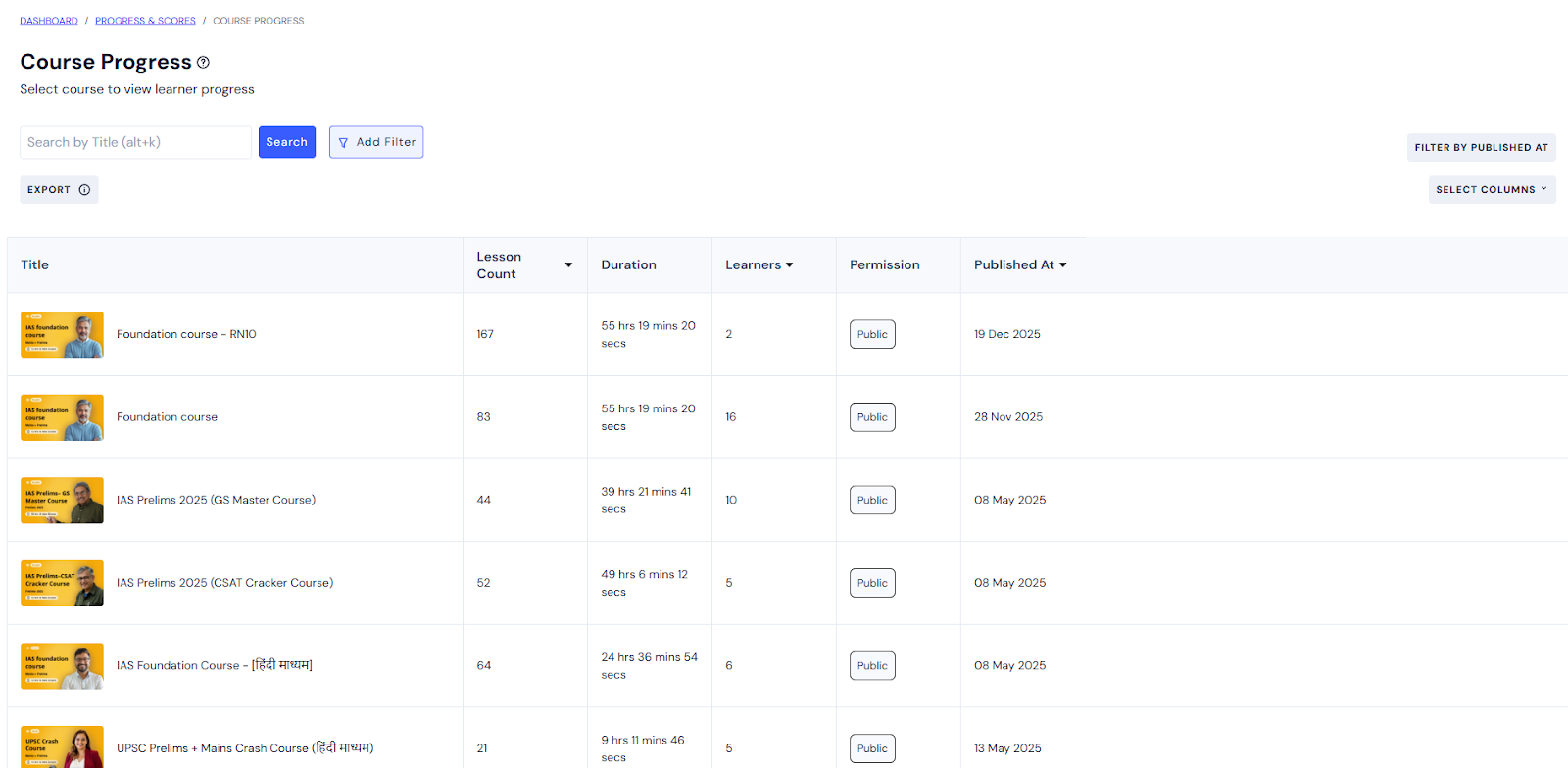
Among the most common features of a good LMS, course progress tracking gives detailed insights into how learners are advancing through their training. These reports highlight completion percentages, time taken per module, and whether deadlines are being met.
It is one of the key LMS Reporting types that gives deeper insights on courses.
3. Learner Enrollment Reports
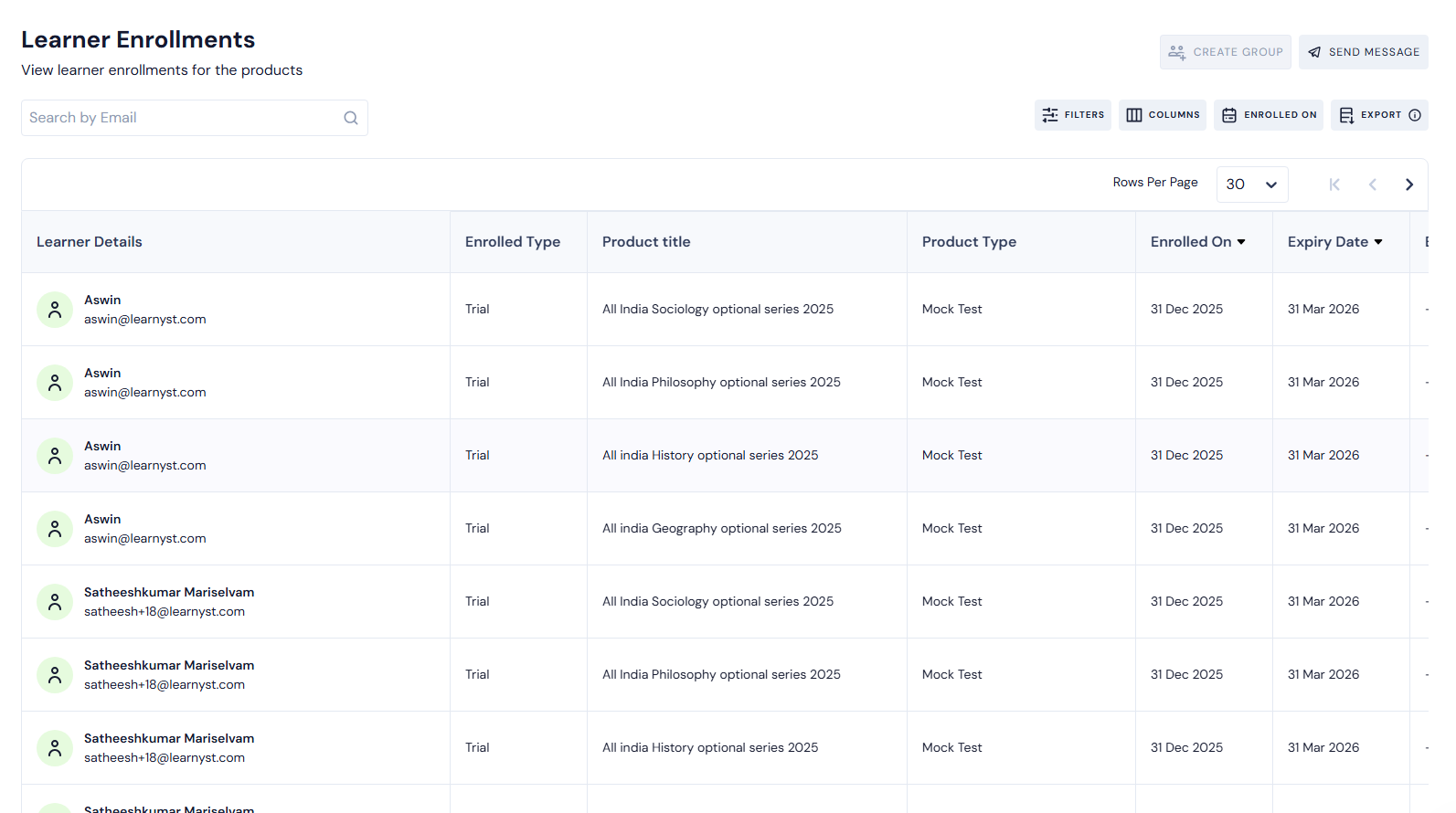
This type of report tracks how many learners have enrolled in specific courses or programs. It is particularly useful for administrators to measure course demand, engagement levels, and training adoption rates.
In many cases, enrollment data also feeds into marketing and sales reports.
4. Custom Reports
Every organization has unique training needs. With custom LMS reporting, admins can design personalized reports using different filters columns based on KPIs such as department, job role, or learning objectives. This flexibility is a secure LMS feature that ensures businesses can track metrics most relevant to them.
5. Quiz Analytics Reports
One of the key LMS features for measuring knowledge retention is quiz and assessment analytics. These reports show learner scores, average attempts, and question-level insights. By analyzing quiz data, instructors can adjust content for better learner outcomes.
6. Marketing and Sales Reports
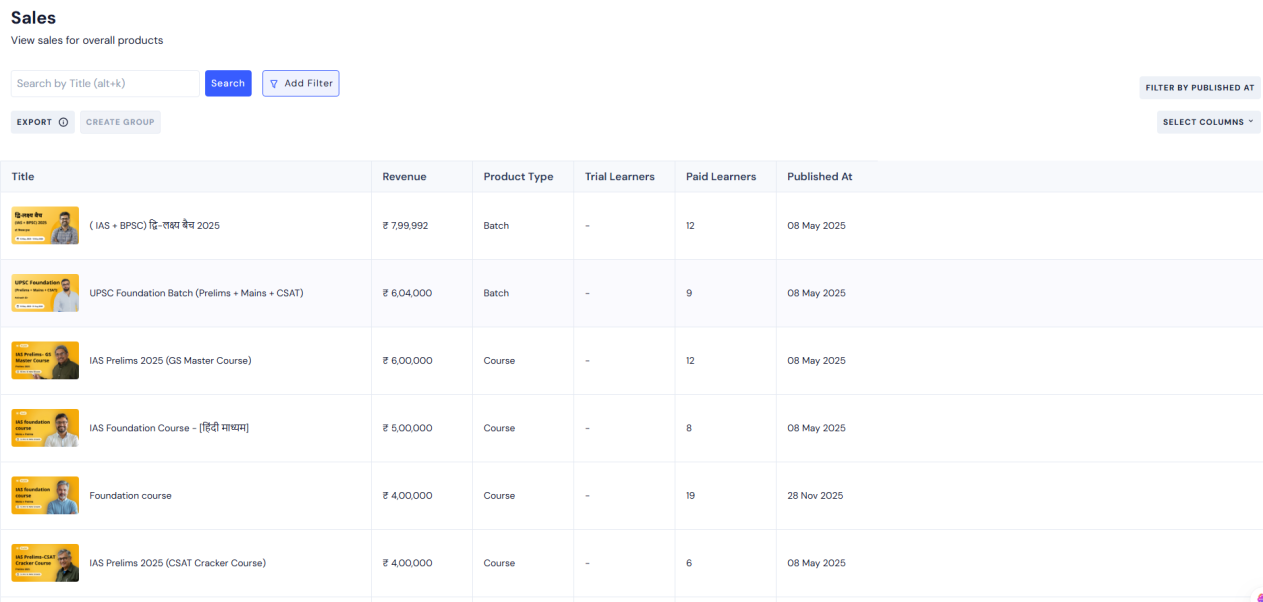
For academies and training providers, LMS reporting features often include marketing and sales insights. These reports cover course sales, revenue generation, conversion rates, and learner acquisition trends. They are essential for scaling training businesses and are often part of the best LMS features list for commercial e-learning platforms.
It also gives insights on coupon and affiliate performances, thus helping with further marketing strategies for courses.
7. Live Class Attendance Reports
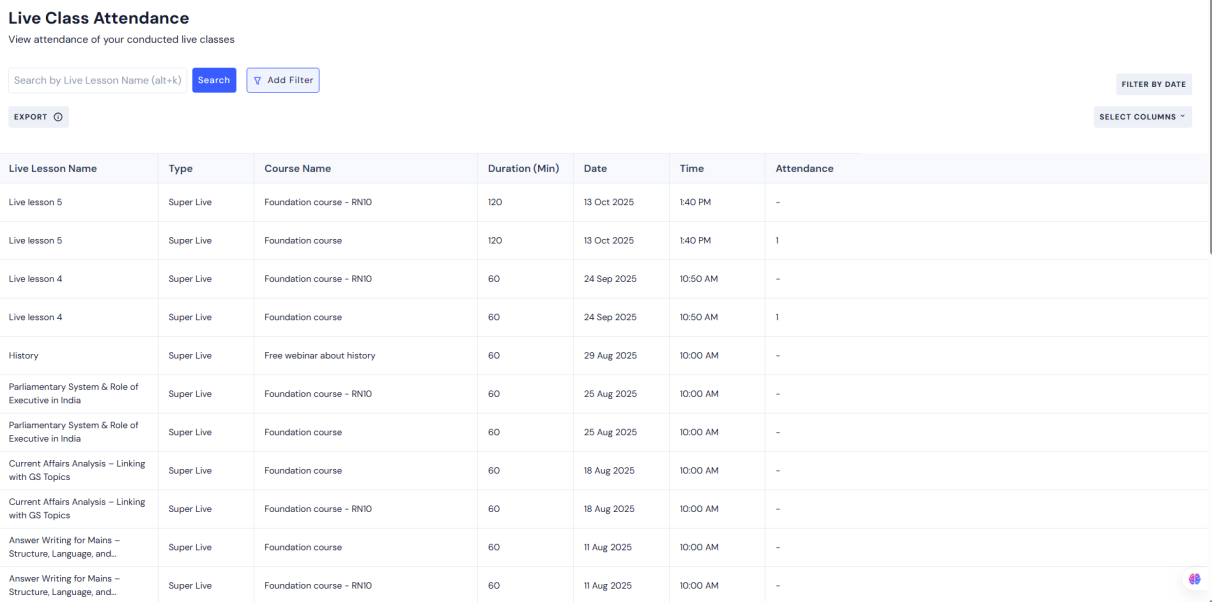
In blended learning or instructor-led training setups, attendance reports track learner participation in live sessions, webinars, or classroom-based training. This is an essential LMS tracking and reporting tool for compliance-driven industries, ensuring learners meet required training hours.
8. Resource Usage Reports
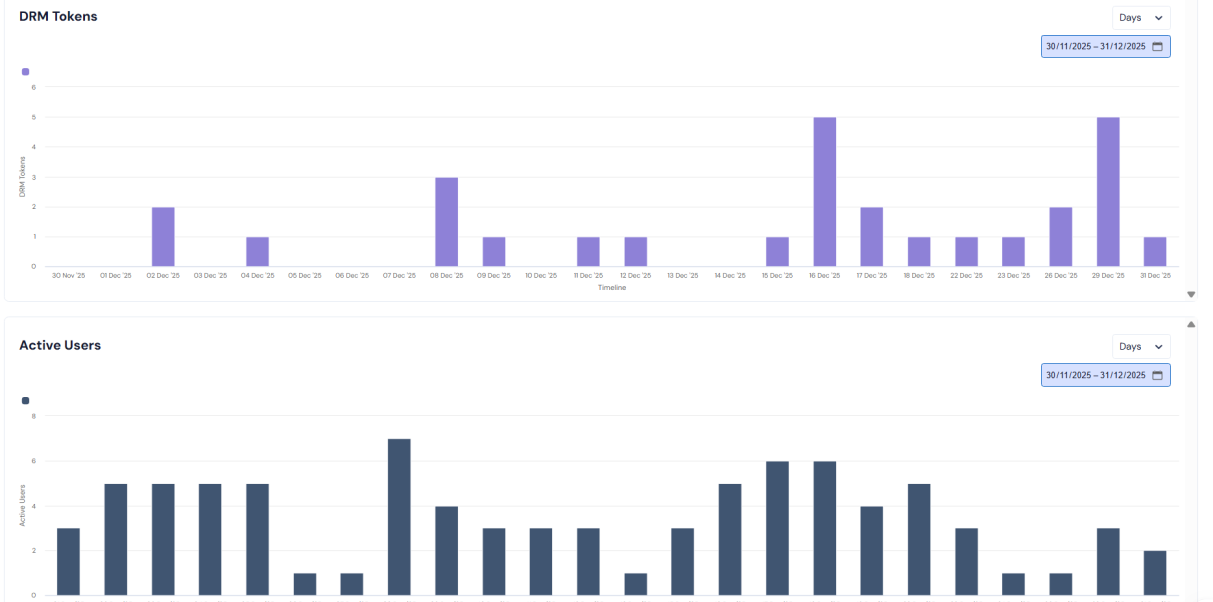
Finally, resource usage reports show how learners interact with supporting content such as PDFs, videos, assignments, or discussion boards. This is one of the key LMS features that helps admins evaluate which learning resources are most valuable and where improvements are needed.
They show data pertaining to Bandwith, Content Storage, Video Hours Transcoded, DRM Tokens, Active Users, Tests Taken, and many more.
LMS Reporting Is No Longer Optional
At this point, it’s clear that LMS reporting is not just another item on an LMS feature list. It’s what separates guesswork from clarity.
Whether you’re running a single cohort or scaling multiple programs, LMS tracking and reporting gives you visibility into what’s actually working and what’s not. From understanding learner behavior and course progress to spotting drop-offs, engagement gaps, and revenue trends, reporting turns raw activity into actionable insights.
The truth is, the features of a good LMS are no longer limited to content delivery or assessments. Today, the key features of an LMS include strong reporting that helps you improve learning outcomes, optimize content, and make confident decisions backed by data. The best platforms don’t just show numbers, they help you interpret them.
If you look at most LMS reporting examples, one thing stands out: teams that actively use reports build better courses, retain learners longer, and scale faster. That’s why reporting consistently ranks among the best LMS features and one of the most underrated key LMS features of all time.
Why Learnyst for LMS Reporting?
Learnyst is built for educators, academies, and training businesses that want more than surface-level insights. With Learnyst’s LMS reporting feature, you can track learner progress, engagement, enrollments, assessments, live class attendance, and business metrics all from one place.
From standard reports to custom dashboards, Learnyst helps you turn data into decisions without complexity. If you’re looking for a secure LMS with powerful LMS tracking and reporting, Learnyst gives you the tools to grow smarter, not just bigger.
If reporting matters to you, your LMS should reflect that.
Explore Learnyst and see how the right LMS reporting setup can change the way you teach, track, and scale.
Comments