
.png)
Moodle has long been one of the most recognized learning management systems in the education industry. Schools, universities, training institutes, and organizations worldwide have used it to deliver online learning programs.
However, the online education landscape has changed significantly.
Today's educators and course creators need more than a platform that simply hosts learning content. They need tools to create engaging learning experiences, build communities, market courses, manage payments, track learner progress, and scale their businesses efficiently.
As a result, many educators, coaches, training providers, and businesses are actively searching for Moodle alternatives that offer greater flexibility, easier management, and modern business-growth features.
Whether you're looking for a cloud-based LMS, a platform for selling online courses, or a complete online academy solution, there are several strong alternatives available today.
In this guide, we'll explore the best Moodle alternatives in 2026, compare their strengths and limitations, and help you choose the right platform for your goals.
What Is Moodle, and why do Educators Look for Alternatives?
Moodle is one of the most widely used open-source learning management systems across schools, colleges, and universities. Its biggest advantage is flexibility. Since it is open source, institutions can customize the platform, add plugins, and modify the system based on their needs. However, this flexibility also brings practical challenges that many educators and training teams struggle with.
- First, Moodle requires technical support. Setting up the platform, configuring hosting, and managing updates often demands a dedicated developer or IT team. Without technical help, even simple tasks can become difficult.
- Second, Moodle does not come with built-in hosting. Institutions must manage their own servers, which means handling performance, uptime, backups, and security on their own. This becomes especially difficult during high-traffic periods such as exam seasons or new course launches.
- Third, upgrades and security patches need to be applied manually. If updates are not maintained regularly, the platform can become slow, unstable, or vulnerable to security risks.
- Fourth, Moodle depends heavily on plugins for essential features. These plugins often break with updates, leading to frequent troubleshooting and additional maintenance costs.
- Finally, overall performance depends on server quality. If hosting is not optimized, the LMS becomes slow, affecting student experience and course engagement.
Because of these issues, educators today prefer cloud-based LMS platforms that eliminate technical work. Modern cloud LMS systems do not require servers, installation, or maintenance. They offer ready-made integrations, automatic updates, strong security, and an interface that is easy for both teachers and students.
This shift toward simplicity and speed has made Moodle alternatives increasingly popular among educators, coaching institutes, and training businesses.
Why Are Educators Looking for Moodle Alternatives?
While Moodle remains a powerful open-source LMS, many users eventually encounter challenges as their learning businesses grow.
Complex Setup and Maintenance
Unlike many modern cloud-based LMS platforms, Moodle often requires technical expertise for setup, hosting, maintenance, updates, and customization. This can create additional workload for educators who want to focus on teaching rather than managing technology.
Limited Marketing and Sales Features
Moodle was originally designed for learning management rather than course selling.
Many creators eventually need features such as:
- Landing pages
- Sales funnels
- Email marketing
- Affiliate management
- Subscription plans
These capabilities often require additional integrations or third-party tools.
Modern Learner Expectations
Today's learners expect mobile-friendly experiences, interactive communities, progress tracking, and engaging course journeys.
Many creators explore alternatives to Moodle that provide these features out of the box.
Scalability for Growing Businesses
As enrollments increase, educators often need a platform that can support larger learner bases, multiple products, advanced analytics, and streamlined business operations.
Top Moodle Alternatives for 2026
If you find Moodle difficult to manage or too technical for everyday teaching, you are not alone. Thousands of educators, coaching centers, and training businesses now prefer LMS platforms that are simpler, faster, and require zero technical setup. Below are the top alternatives you can explore in 2026.
1. Learnyst – The Best Moodle Alternative for Educators and Coaching Institutes
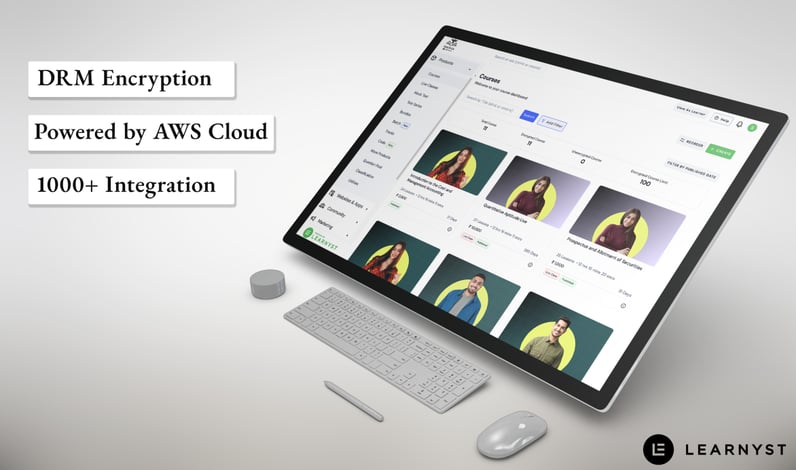
Learnyst is one of the strongest and most practical Moodle alternatives. Unlike Moodle, which requires hosting, server management, and technical assistance, Learnyst is a completely cloud-based LMS that works out of the box. You can launch your branded online academy, website, and mobile app in just a few minutes without any technical knowledge.
Why Learnyst Is a Better Alternative to Moodle
- No technical setup: You do not need coding skills, developers, or servers.
- All-in-one teaching platform: Host unlimited courses, tests, mock exams, assignments, live classes, and PDFs in one place.
- Stronger content protection: Built-in DRM security for videos and documents reduces piracy risks.
- Marketing and sales tools included: landing pages, coupons, analytics, email tools, and student insights, without relying on plugins.
- Easy payment gateway integration: Supports popular payment gateways, making transactions smooth for students.
- Branded mobile apps: Offer students a premium learning experience with your own Android and iOS apps.
- Responsive support: India-based support ensures quick resolution whenever you need help.
- Simple and transparent pricing: No hidden expenses for hosting, plugins, or maintenance.
Coaching institutes, teachers, exam-prep educators, professional trainers, and online course creators.
If you want an LMS that is simple, secure, and built to handle real teaching business needs, Learnyst is one of the best Moodle alternatives you can choose in 2026
2. Canvas LMS – Best Moodle Alternative for Higher Education
Canvas is one of the most widely adopted LMS platforms in the higher education space. Compared to Moodle, Canvas offers a more modern, cloud-first experience with a clean and intuitive interface that requires little to no technical knowledge. Its strong academic tools and seamless student-teacher collaboration make it a preferred choice for colleges and universities around the world.
Why Canvas Is a Strong Moodle Alternative
- Intuitive and modern interface: Canvas is known for its clean layout, simple navigation, and easy course setup, which makes it far more user-friendly than Moodle.
- Advanced academic tools: Its grading system, assessment workflows, rubrics, and feedback options are built to support large academic institutions.
- Strong collaboration features: Students can engage through discussion boards, group work, messaging tools, and built-in integrations with productivity platforms.
- Mobile-friendly learning: Both instructors and students get a smooth experience through well-designed mobile apps.
- Cloud-hosted reliability: Canvas handles hosting, security, and updates automatically, reducing the dependence on IT teams.
Best For
Universities, colleges, large educational institutions, and departments need a high-quality academic LMS with strong grading and collaboration tools.
3. Google Classroom – Simple Moodle Alternative for Schools
Google Classroom is one of the most widely used LMS tools in the K–12 education system. It focuses on simplicity and ease of use rather than advanced LMS features. For schools that find Moodle too complex or difficult to manage, Google Classroom offers a straightforward and lightweight alternative that works seamlessly with Google’s ecosystem.
Why Google Classroom Is a Good Moodle Alternative
- Free for schools: Schools using Google Workspace for Education can access Classroom at no additional cost, making it a budget-friendly option.
- Easy setup and use: Teachers can create classes, share assignments, and communicate with students quickly without needing any technical skills.
- Deep integration with Google Workspace: Tools like Google Docs, Drive, Meet, and Forms work smoothly within Classroom, making collaboration simple for both teachers and students.
- Lightweight and cloud-based: There are no servers to manage, and updates happen automatically.
Best For
Schools, K–12 teachers, and small academic teams that need basic LMS features like assignments, announcements, and simple grading without the complexity of Moodle.
4. TalentLMS – Best Moodle Alternative for Corporate Training
TalentLMS is a popular cloud-based LMS designed for businesses that want simple training delivery without technical complexity. It works especially well for companies that need to train employees, partners, and customers with minimal setup time. Compared to Moodle, which requires hosting and plugins, TalentLMS provides an out-of-the-box experience with a clean and modern UI.
Why TalentLMS Is a Strong Moodle Alternative
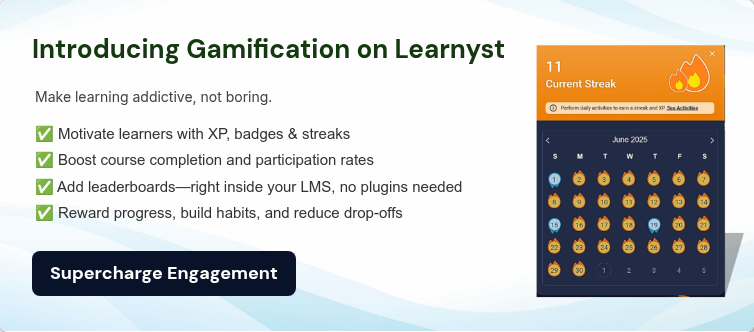
- Gamification for better engagement: Companies can add badges, points, and leaderboards to make learning more interactive and motivating.
- Integrations with HR and corporate tool: TalentLMS connects with widely used HR systems and business applications, making employee onboarding and compliance training easier.
- Simple and clean interface: The platform is easy for administrators, managers, and learners, reducing the need for IT support.
- Cloud-based and scalable: No hosting or maintenance is required, and the platform handles high traffic smoothly.
Best For
Small and mid-sized companies that need a hassle-free LMS for employee onboarding, compliance training, and continuous workforce development.
5. Thinkific – Best Moodle Alternative for Course Creators
Thinkific is one of the most well-known platforms for creators who want to build and sell online courses. It focuses heavily on ease of use and offers beautiful course designs that require no coding. Unlike Moodle, which is built for institutions and needs technical setup, Thinkific helps creators launch and sell courses quickly on a global scale.
Why Thinkific Is a Strong Moodle Alternative
- Attractive and modern course designs: Creators can build visually appealing courses using drag-and-drop tools, making learning more engaging for their audience.
- Memberships and community features: Thinkific allows creators to create memberships, run communities, and nurture long-term learner engagement.
- Built for global selling: Integrated payment gateways, marketing tools, and seamless checkout make selling courses internationally much easier than traditional LMS platforms.
- Simple and beginner-friendly: The interface is intuitive, making it ideal for solo creators or small teams without technical support.
Best For
Creators, coaches, and small businesses focused on selling online courses and growing a digital learning brand.
6. Teachable – Best Moodle Alternative for Solo Educators and Course Sellers
Teachable is another strong alternative to Moodle, especially for individual creators who want a simple, sales-focused platform. It offers an easy setup and tools designed to help educators monetize their knowledge without dealing with technical complications.
Why Teachable Works Well as a Moodle Alternative
- Beginner-friendly course creation: Educators can build courses quickly using Teachable’s clean and simple interface. No hosting, plugins, or tech setup is required.
- Built-in payment processing: Teachable handles global payments, taxes, and payouts, making it easier for creators to manage revenue without depending on external tools.
- Affiliate marketing tools: Creators can recruit affiliates to promote their courses and increase sales, which is a major advantage for solo educators.
- Focus on monetization: Teachable prioritizes features related to selling courses, making it ideal for educators who want to turn expertise into income.
Best For
Solo educators, coaches, and course sellers looking for a straightforward, sales-focused LMS with minimal setup needs.
7. Docebo – Best Moodle Alternative for AI-Powered Corporate Training
Docebo is a powerful enterprise LMS and one of the strongest alternatives to Moodle for organizations that need AI-driven learning. It is widely used by multinational companies because it automates training workflows and supports large-scale learning environments.
Why Docebo Stands Out as a Moodle Alternative
- AI-powered learning paths: Docebo uses artificial intelligence to recommend courses, personalize learning journeys, and help employees upskill faster.
- Advanced enterprise reporting: Companies get detailed analytics, compliance tracking, and performance insights, making it easier to measure the impact of training.
- Global-ready features: With multi-language support and enterprise-grade security, Docebo is suitable for organizations with international teams.
- Automation for efficiency: Docebo reduces manual work by automating enrollments, learning paths, assignments, and notifications.
Best For
Large companies, enterprises, and global corporations that need an LMS with AI-driven learning capabilities and scalable corporate training features.
8. Schoology – Best Moodle Alternative for K–12 Schools
Schoology is a popular LMS designed specifically for K–12 education. It blends traditional LMS features with a social learning experience, making it easier for students, teachers, and parents to stay connected. Unlike Moodle, which requires manual setup and plugins, Schoology comes ready with tools built for modern classrooms.
Key Features
- Collaborative learning tools: Teachers and students can interact through discussion boards, group spaces, and shared activities that encourage participation.
- Parent dashboards: Parents get visibility into assignments, grades, and class updates, which helps them stay involved in their child’s learning.
- Curriculum mapping: Schools can organize and align their curriculum, ensuring consistency across grades and subjects.
Best For
Schools, districts, and K–12 institutions need a simple, unified LMS with strong communication and collaboration features.
9. Blackboard Learn – Trusted Moodle Alternative for Enterprise Education
Blackboard Learn is one of the most established LMS platforms used by large academic and government institutions. It is known for its strong administrative controls and enterprise-level performance. For organizations that need advanced reporting, high security, and deep integrations, Blackboard often becomes a preferred Moodle alternative.
Key Features
- Strong security: Blackboard provides enterprise-grade data protection, making it suitable for institutions that handle sensitive academic information.
- Advanced reporting and analytics: Universities can track learner performance, course engagement, and program outcomes with detailed analytics.
- Seamless SIS integration: Blackboard integrates smoothly with Student Information Systems, simplifying enrollment, grading, and administrative workflows.
Best For
Large universities, government institutions, and enterprise-level education providers that need high scalability and advanced academic management tools.
10. Open edX – Best Open-Source Moodle Alternative
Open edX is a powerful open-source LMS created by Harvard and MIT. It offers a more modern and scalable framework compared to Moodle, making it a strong choice for institutions that want complete customization with full control over their learning environment. While it offers flexibility, it still requires technical expertise for hosting, development, and maintenance.
Key Features
- Highly scalable: Open edX supports large universities and global learning platforms, making it suitable for institutions with thousands of learners.
- Ideal for MOOCs: It is widely used for massive open online courses, offering robust video delivery, assessments, and discussion forums.
- Flexible customization: Organizations can customize themes, workflows, and learning tools when they have skilled developers.
Best For
Universities and institutions with strong technical teams, IT budgets, and the need for a fully customizable open-source LMS.
Moodle Alternatives Comparison(2026)
| LMS Platform | Best For | Key Strengths | Why It’s a Moodle Alternative |
|---|---|---|---|
| Learnyst | Educators, Coaching Institutes, and Corporate trainings |
DRM security, Multi-payments, branded apps, Gamification, Advanced Analytics, Affiliates |
No Hidden Charges, simple, built for teaching businesses - All-in-One LMS platform |
| Canvas LMS | Universities & Colleges | Modern UI, strong grading tools | Cloud-first, easier to use, better UX |
| Google Classroom | Schools (K–12) | Free, simple, integrates with Google Workspace | Zero setup, perfect for basic teaching needs |
| TalentLMS | Corporate Training | Gamification, HR integrations | Lightweight, cloud-hosted, no plugins |
| Thinkific | Creators & Coaches | Course selling tools, memberships | Business-friendly, no technical setup |
| Teachable | Solo Educators | Payment tools, affiliate features | Easier monetization and course management |
| Docebo | Enterprises | AI automation, advanced reporting | Scalable and modern compared to Moodle |
| Schoology | K–12 & Districts | Collaboration tools, parent dashboards | More user-friendly, social learning approach |
| Blackboard Learn | Large Institutions | Security, reporting, SIS integration | Stable alternative with enterprise support |
| Open edX | Tech-Savvy Universities | Open source, scalable, MOOCs | More modern interface and structure than Moodle |
How to Choose the Best Moodle Alternative
Before selecting a Moodle alternative, it is important to understand what your teaching or training setup truly needs. Many educators switch from Moodle because maintaining servers, plugins, and updates becomes a burden over time. Asking a few simple questions can help you make the right decision.
Start by clarifying your goals. Do you want a platform that allows you to teach internally, or do you also want to sell courses, memberships, or digital products? Next, consider how your learners access your content. If mobile learning is important, choose an LMS that offers a smooth app experience.
Think about your team’s technical comfort. Moodle requires hosting, configuration, and plugin management. If your team is not tech-savvy, a cloud-hosted platform will save significant time. Also evaluate how important content security is for you. If you deal with paid courses or sensitive learning materials, look for features like DRM protection, watermarking, and secure video streaming.
Budget is another key factor. Open-source tools seem free initially but require developers, server costs, and ongoing maintenance. Cloud-based platforms often provide better long-term value because everything is managed for you.
If your goal is to reduce workload, improve the learner experience, and scale without technical hurdles, choosing a modern cloud-based Moodle alternative is often the smarter and more efficient option.
Why Learnyst Is the Best Moodle Alternative in India
Learnyst has become one of the strongest Moodle alternatives in India because it removes the daily struggles educators face with open-source systems. While Moodle requires hosting, plugins, and technical expertise, Learnyst offers a ready-to-use, secure, cloud-based platform designed specifically for Indian educators and coaching businesses.
Many educators switch from Moodle to Learnyst due to recurring challenges such as:
-
Content piracy that affects revenue
-
High platform or maintenance costs
-
Slow support from global LMS providers
-
Complicated interface and setup
-
Limited exam and test-prep features
-
Frequent plugin failures and compatibility issues
Learnyst solves these problems with modern, educator-friendly features that work out of the box:
-
DRM-protected videos and secure PDFs to prevent piracy
-
Branded mobile apps for Android and iOS
-
Seamless Indian payment gateways like Razorpay, Paytm, Cashfree
-
Fast India-based customer support
-
Built-in tools for teaching, marketing, and selling courses
-
Affordable, transparent pricing with zero setup hassle
With more than 10,000 educators and institutes relying on Learnyst, it has become one of the most trusted and practical Moodle alternatives in India—especially for teachers, coaching institutes, and professional trainers who want simplicity, security, and scalability without technical headaches.
If you're looking for a platform that helps you teach better, grow faster, and stay secure, Learnyst is the ideal choice.

Conclusion: Choose an LMS That Makes Teaching Easier, Not Harder
Finding the right Moodle alternative is no longer just about features. It is about choosing an LMS that saves time, reduces technical work, protects your content, supports your learners, and helps your teaching business grow sustainably.
Most educators today simply want a platform that works without complications. They want to upload content quickly, run live classes smoothly, track performance easily, and offer a great learning experience—without managing hosting, plugins, coding, or security patches.
This is exactly where cloud-first LMS platforms outperform Moodle.
And this is where Learnyst becomes the perfect choice for educators in India.
Why Learnyst Fits Your Needs Better
Learnyst is built specifically for teachers, coaching institutes, and training businesses. It gives you everything Moodle offers—but without the technical burden. You can launch your academy, protect your content, sell online courses, manage students, and grow your brand with zero tech skills.
Learnyst replaces complexity with clarity.
It replaces plugins with built-in tools.
It replaces risk with secure DRM protection.
It replaces dependency with full control over your academy.
If you want an LMS that truly supports the way Indian educators teach, Learnyst is your best Moodle alternative.
FAQs
1. Why do educators look for Moodle alternatives?
Moodle requires hosting, plugins, maintenance, and technical setup. Many educators prefer cloud-based LMS platforms that offer easier setup, better support, and built-in features.
2. Is a cloud LMS better than Moodle?
For most educators and coaching institutes, yes. Cloud LMS platforms are faster, more secure, easier to manage, and do not require IT support.
3. Which is the best Moodle alternative in India?
Learnyst is widely considered one of the top Moodle alternatives in India because it offers DRM security, branded apps, Indian payment gateways, and fast local support.
4. Does Learnyst require coding or installation?
No. Learnyst is fully cloud-based. You can set up your academy in minutes without any technical knowledge.
5. Is Learnyst suitable for exam-prep institutes?
Yes. Learnyst has advanced test engines, question banks, analytics, secure content, and mobile apps designed for exam preparation.
6. Can I migrate from Moodle to Learnyst easily?
Yes. Learnyst provides migration support for courses, tests, student data, and more.
7. Is Learnyst affordable?
Learnyst is more affordable than many global LMS platforms and offers transparent pricing with no hidden charges.
Comments